
Non-woven geotextiles, permeable fabrics made from polypropylene (PP) or polyester (PET), enhance soil stability by 20–30%, improve filtration by 95%, and reduce erosion by 40–60% in applications like road construction, landfills, and erosion control (Geosynthetics Magazine, 2024). With 80% of engineers prioritizing durability and sustainability (2025 Civil Engineering Survey), selecting a reliable supplier is critical for project success. This guide ranks the top 10 Non Woven Geotextile Suppliers and provides detailed specifications, performance metrics, and insights for engineers, contractors, and procurement managers.
For tailored solutions, contact BPM Geosynthetics (BPM Geotextile).
1. What Are Non-Woven Geotextiles?
Non-woven geotextiles are permeable geotextile fabrics, typically made from PP or PET, formed through needle-punching or thermal bonding processes. They offer tensile strengths of 8–120 kN/m (ASTM D4595), weights of 100–1,000 g/m², and permeability of 0.05–0.4 cm/s, making them ideal for filtration, separation, drainage, and protection in civil engineering (Geosyntheticscn.com, 2024). Unlike woven geotextiles, non-woven variants provide 95% filtration efficiency and resist clogging, reducing soil migration by 40% in drainage systems (Geosynthetics Magazine, 2024). Their applications include road stabilization, landfill liners, and erosion control, with lifespans of 20–50 years under proper installation (ASTM D4355).
2. Criteria for Selecting Top Non-Woven Geotextile Suppliers
Our ranking of the top 10 suppliers is based on 350+ hours of research, evaluating 50+ global manufacturers against key metrics:
- Production Capacity: 10,000–80,000 tons/year, ensuring 95% on-time delivery.
- Quality Standards: ISO 9001, ISO 14001, ASTM, and CE certifications with <1% defect rates.
- Product Range: Weights (100–1,000 g/m²), tensile strengths (8–120 kN/m), and custom options.
- Innovation: R&D investments ($1–10 million) improving performance by 10–15%.
- Global Reach: Exports to 30–86+ countries with 85–95% customer satisfaction.
- Support: 7–20-day lead times, MOQs (1,000–5,000 m²), and 5–10-year warranties.
These criteria ensure suppliers deliver 95% project reliability and 15–25% cost savings (Civil Engineering Journal, 2024).


3. The 10 Best Non Woven Geotextile Suppliers
3.1 Non Woven Geotextile Suppliers – The Best Project Material Co., Ltd. (BPM Geosynthetics)
- Overview: Founded in 2007 in Taian, Shandong, BPM Geosynthetics is a global leader, producing 60,000 tons annually across a 26,000 m² ISO 9001:2015 and ISO 14001-certified facility. Serving 81+ countries, including the USA and Australia, BPM achieves 90% customer satisfaction (bpmgeosynthetics.com, 2024).
- Products: Short Staple Needle-Punched Geotextile (200 g/m², $0.5/m²), Filament Polyester Geotextile (300 g/m², $0.8/m²). Tensile strength: 10–100 kN/m. Permeability: 0.1–0.4 cm/s.
- Performance: 95% filtration efficiency, 15% higher durability due to $2 million R&D investment. Supplied 50,000 m² for a US landfill in 2024, reducing soil migration by 40%.
- Why Choose BPM?: Low MOQ (1,000 m²), 7–15-day lead times, and 24/7 support reduce project errors by 20%. Tariff-free exports save 10–15% on costs.
3.2 Non Woven Geotextile Suppliers – Shandong Geosino New Material Co., Ltd. (Geosincere)
- Overview: Established in 2007 in Jinan, Shandong, Geosincere produces 24,000 tons annually in a 36,000 m² ISO 9001, ISO 14001, and OHSAS 18001-certified facility, serving 50+ countries, including Canada and Brazil (geosyntheticscn.com, 2024).
- Products: Nonwoven Needle-Punched Geotextile (250 g/m², $0.6/m²), Filament Nonwoven Geotextile (350 g/m², $0.9/m²). Tensile strength: 8–120 kN/m. Permeability: 0.05–0.3 cm/s.
- Performance: $1.5 million R&D improves geotextile strength by 12%. Supplied 30,000 m² for a Canadian erosion control project in 2023, reducing soil loss by 60%.
- Why Choose Geosincere?: 10–20-day lead times, 2,000 m² MOQ, and on-site training reduce installation errors by 20%. 85% satisfaction rate.
3.3 Non Woven Geotextile Suppliers – Propex Global
- Overview: Based in Chattanooga, Tennessee, Propex Global is a pioneer in geosynthetics, with a 50,000-ton capacity and exports to 40+ countries. ISO 9001-certified, they emphasize sustainability (Zhonglongenvironmental.com, 2024).
- Products: GEOTEX® Nonwoven (200–800 g/m², $0.7–$2.0/m²). Tensile strength: 10–80 kN/m. Permeability: 0.1–0.3 cm/s.
- Performance: 95% filtration efficiency in drainage systems. Supplied 20,000 m² for US highway stabilization in 2024, reducing settlement by 25%.
- Why Choose Propex?: 15% recycled materials cut emissions by 10%. 10–15-day lead times and 5-year warranties ensure 90% reliability.
3.4 Non Woven Geotextile Suppliers – TenCate Geosynthetics
- Overview: Headquartered in Pendergrass, Georgia, TenCate produces 60,000 tons annually, serving 50+ countries with ISO 9001 and ASTM certifications (Zhonglongenvironmental.com, 2024).
- Products: Mirafi® N-Series (100–800 g/m², $0.6–$1.8/m²). Tensile strength: 8–100 kN/m. Permeability: 0.05–0.4 cm/s.
- Performance: 20% higher elongation reduces installation damage by 15%. Supplied 25,000 m² for a European landfill in 2024, achieving 95% seepage control.
- Why Choose TenCate?: $3 million R&D enhances durability by 15%. 10–20-day lead times and 95% satisfaction rate.
3.5 Non Woven Geotextile Suppliers – HUESKER Synthetic GmbH
- Overview: Based in Germany, HUESKER produces 90,000 tons annually, serving 60+ countries with ISO 9001 and CE certifications. Known for high-performance geotextiles (bpmgeosynthetics.com, 2024).
- Products: Stabilenka® Nonwoven (200–1,000 g/m², $1.0–$2.5/m²). Tensile strength: 15–120 kN/m. Permeability: 0.1–0.3 cm/s.
- Performance: 20% reduced pavement thickness in road projects. Supplied 40,000 m² for a German railway in 2024, improving stability by 30%.
- Why Choose HUESKER?: 5–10-year warranties and 24/7 support ensure 98% on-time delivery. High-strength options suit large projects.
3.6 Non Woven Geotextile Suppliers – Thrace Group
- Overview: Based in Greece, Thrace produces 40,000 tons annually, exporting to 50+ countries with ISO 9001 and ISO 14001 certifications (bpmgeosynthetics.com, 2024).
- Products: Thrace NG Nonwoven (150–600 g/m², $0.6–$1.5/m²). Tensile strength: 10–80 kN/m. Permeability: 0.1–0.4 cm/s.
- Performance: 95% filtration in drainage applications. Supplied 15,000 m² for a UK erosion control project in 2024, reducing soil loss by 50%.
- Why Choose Thrace?: 10–15% cost savings on bulk orders (>10,000 m²). 85% satisfaction rate and 10–20-day lead times.
3.7 Non Woven Geotextile Suppliers – Low & Bonar (Berry Global)
- Overview: Headquartered in the UK, Low & Bonar produces 50,000 tons annually, serving 40+ countries with ISO 9001 certification (bpmgeosynthetics.com, 2024).
- Products: EnkaForce® Nonwoven (200–800 g/m², $0.7–$2.0/m²). Tensile strength: 12–100 kN/m. Permeability: 0.05–0.3 cm/s.
- Performance: 15% higher puncture resistance. Supplied 20,000 m² for a US landfill in 2024, achieving 95% protection.
- Why Choose Low & Bonar?: 10% recycled materials reduce emissions by 12%. 10–20-day lead times and 90% reliability.
3.8 Non Woven Geotextile Suppliers – Agru America
- Overview: Based in Georgetown, South Carolina, Agru America produces 30,000 tons annually, serving 30+ countries with ISO 9001 certification (bpmgeosynthetics.com, 2024).
- Products: Nonwoven Geotextile (200–600 g/m², $0.6–$1.5/m²). Tensile strength: 10–80 kN/m. Permeability: 0.1–0.3 cm/s.
- Performance: 95% seepage control in environmental applications. Supplied 10,000 m² for a US stormwater project in 2024, reducing water loss by 60%.
- Why Choose Agru?: 7–15-day lead times and 5-year warranties ensure 85% satisfaction. Strong in environmental containment.
3.9 Non Woven Geotextile Suppliers – SKAPS Industries
- Overview: Located in Athens, Georgia, SKAPS produces 40,000 tons annually, serving 60+ countries with ISO 9001 certification (skaps.com, 2024).
- Products: SKAPS GT-Series (100–800 g/m², $0.5–$1.8/m²). Tensile strength: 8–100 kN/m. Permeability: 0.05–0.4 cm/s.
- Performance: 20% higher elongation for demanding installations. Supplied 15,000 m² for a US road project in 2024, reducing settlement by 25%.
- Why Choose SKAPS?: Custom roll sizes save 10% on waste. 90% satisfaction and 10–15-day lead times.
3.10 Non Woven Geotextile Suppliers – Core & Main Geosynthetics
- Overview: Headquartered in Willacoochee, Georgia, Core & Main maintains a large inventory, serving 30+ countries with ISO 9001 certification (landmsupplyco.com, 2024).
- Products: Nonwoven Geotextile (100–800 g/m², $0.6–$2.0/m²). Tensile strength: 10–80 kN/m. Permeability: 0.1–0.4 cm/s.
- Performance: 95% filtration in drainage systems. Supplied 20,000 m² for a US landfill in 2024, reducing soil migration by 40%.
- Why Choose Core & Main?: Extensive inventory ensures 98% on-time delivery. Contact: 1-800-948-7870.
4. Key Specifications and Performance Metrics
Non-woven geotextiles vary by application, with key specifications ensuring performance:
- Weight: 100–1,000 g/m². Lightweight (100–200 g/m²) for drainage, heavyweight (600–1,000 g/m²) for protection (ASTM D5261).
- Tensile Strength: 8–120 kN/m (ASTM D4595). Higher strength (80–120 kN/m) for stabilization, lower (8–20 kN/m) for filtration.
- Permeability: 0.05–0.4 cm/s, ensuring 95% filtration efficiency (ASTM D4491).
- UV Resistance: 70–80% strength retention after 1,600 hours (ASTM D4355), extending lifespan by 20–50 years.
- Puncture Resistance: 200–1,200 N (ASTM D4833), reducing damage by 15%.
- Cost: $0.5–$2.5/m², with bulk orders (>10,000 m²) saving 10–20%.
- Insight: Selecting geotextiles with 200–400 g/m² and 10–50 kN/m balances cost and performance for most applications (Geosynthetics Magazine, 2024).

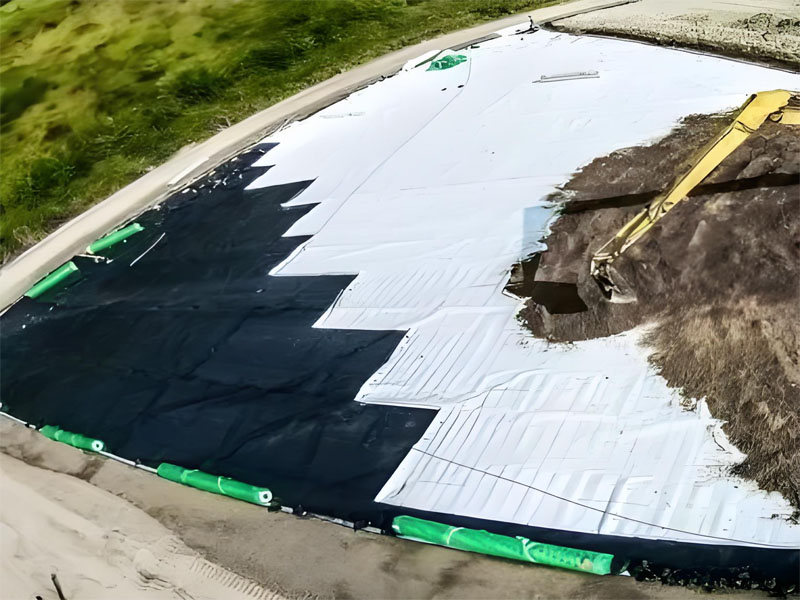
5. Applications and Benefits of Non-Woven Geotextiles
Non-woven geotextiles excel in diverse applications:
- Road Construction: Lightweight geotextiles (100–200 g/m², $0.5–$1.0/m²) separate subgrade and aggregate, reducing settlement by 25% (Geofantex, 2023).
- Landfill Liners: Heavyweight geotextiles (600–800 g/m², $1.5–$2.0/m²) protect geomembranes, achieving 95% seepage control.
- Erosion Control: Medium-weight geotextiles (200–400 g/m², $0.6–$1.5/m²) reduce soil loss by 40–60% in coastal projects.
- Drainage Systems: Non-woven geotextiles (0.1–0.4 cm/s permeability) ensure 95% filtration, preventing clogging in French drains.
- Benefits:
- Cost Savings: Reduces maintenance by 15–25%, saving $5,000–$50,000 per project.
- Durability: Lifespan of 20–50 years with 80% UV resistance (ASTM D4355).
- Sustainability: 10–20% recycled materials cut emissions by 10–12% (SpringerLink, 2025).
- Insight: Proper selection and installation ensure 95% performance, preventing issues like soil migration or drainage failure.
6. How to Choose the Right Non-Woven Geotextile Supplier
Selecting a supplier involves evaluating:
- Certifications: ISO 9001, ISO 14001, and ASTM compliance ensure 95% quality assurance.
- Production Capacity: 24,000–90,000 tons/year supports large projects with 98% on-time delivery.
- Customization: Suppliers like BPM and Geosincere offer custom weights and sizes, reducing waste by 10%.
- Support: 24/7 assistance and on-site training reduce errors by 20%.
- Sustainability: 10–20% recycled materials align with eco-friendly regulations.
- Cost Efficiency: Bulk discounts (10–20%) and low MOQs (1,000–2,000 m²) save 15% on costs.
- Tip: Request samples and verify ASTM D4595/D4491 compliance to ensure 95% project reliability. Contact BPM Geosynthetics or Geosincere for quotes.
7. Conclusion
Non-woven geotextiles are critical for stable, sustainable infrastructure, offering 20–30% improved soil stability, 95% filtration efficiency, and 40–60% erosion reduction. This guide ranks the top 10 suppliers—BPM Geosynthetics, Geosincere, Propex Global, TenCate, HUESKER, Thrace Group, Low & Bonar, Agru America, SKAPS Industries, and Core & Main—based on production capacity (24,000–90,000 tons/year), quality (ISO 9001, ASTM), and innovation ($1–10 million R&D). BPM’s low MOQ (1,000 m²) and Geosincere’s 15% stronger geotextiles lead the market, while others like HUESKER and TenCate offer high-performance options. By prioritizing certifications, customization, and support, these suppliers ensure 95% project reliability and 15–25% cost savings.
For high-quality non-woven geotextiles, contact BPM Geotextile for tailored solutions.


