
Non-woven geotextiles are indispensable geosynthetic materials in civil engineering, environmental, and construction projects, valued for their filtration, drainage, and separation capabilities. With the global geotextiles market valued at USD 3.39 billion in 2023 and projected to reach USD 6.14 billion by 2032 at a CAGR of 6.8%, Best Non Woven Geotextiles dominate due to their versatility and cost-effectiveness.
This comprehensive guide reviews the 10 best non-woven geotextiles of 2025, focusing on performance, specifications, and value, with standout products from The Best Project Material Co., Ltd (BPM Geosynthetics). Our selections are based on tensile strength, permeability, durability, and compliance with standards like ASTM D4595 and GRI-GT, ensuring you find the ideal geotextile for your project.
1. Our Top Picks
- Best Overall: BPM Geosynthetics Needled Punched Geotextile Fabric
- Best for Drainage: BPM Geosynthetics Continuous Filament Nonwoven Geotextile
- Best Heavy-Duty: Mirafi N-Series N120N Nonwoven Geotextile
- Best Lightweight: US Fabrics US 80NW Nonwoven Geotextile
- Best for Erosion Control: EcoGeoX Non-Woven PET Geotextile
- Best Budget: SRW 3.1 oz. Nonwoven Geotextile
- Best for Landfills: Carthage FX-120HS Heavyweight Nonwoven
- Best for Road Construction: Propex Geotex 801 Nonwoven Geotextile
- Best for Landscaping: Van Beek’s 200R Nonwoven Geotextile
- Best for Filtration: DuPont SF Spunbonded Nonwoven Geotextile
2. What to Look for in Best Non Woven Geotextiles
2.1 Best Non Woven Geotextiles – Key Features
- Tensile Strength: Measured in pounds or kN (e.g., 80–300 lbs grab tensile), critical for load-bearing applications like road stabilization.
- Permeability: Flow rates of 50–150 gpm/ft² ensure effective filtration and drainage without clogging.
- Puncture Resistance: 200–850 lbs protects against sharp objects in landfills or rocky soils.
- Material: Polypropylene (PP) or polyester (PET), with PP dominating 57% of the market for chemical resistance.
- Weight: 3.1–16 oz/yd², with lightweight (3.1–6 oz) for drainage and heavyweight (10–16 oz) for stabilization.
- Durability: UV resistance, pH stability (2–13), and resistance to mildew, insects, and soil chemicals ensure 20–50-year lifespans.
- Certifications: ASTM D4595, GRI-GT, and ISO 9001 compliance guarantee quality.
2.2 Best Non Woven Geotextiles – Considerations
- Application: Drainage and filtration favor lightweight geotextiles, while stabilization requires heavier options.
- Environmental Conditions: UV-stabilized fabrics are essential for exposed applications, and pH stability matters in acidic or alkaline soils.
- Budget: Prices range from $0.20–$2.50/m², with bulk orders reducing costs by 10–20%.


3. The 10 Best Non-Woven Geotextiles
3.1 BPM Geosynthetics Needled Punched Geotextile Fabric
- Price: $0.30–$1.50/m²
- Weight: 4–16 oz/yd² (100–400 g/m²)
- Material: Polypropylene (PP) staple fibers
- Key Specifications: 90–300 lbs grab tensile, 50–100 gpm/ft² flow rate, 200–850 lbs puncture resistance, pH 2–13, UV-resistant.
- Applications: Drainage, filtration, separation, road stabilization.
The BPM Needled Punched Geotextile Fabric is our top pick for its exceptional balance of strength, permeability, and versatility. Manufactured using needle-punching technology, this PP-based geotextile offers 90–300 lbs grab tensile strength and a flow rate of 50–100 gpm/ft², ideal for drainage and filtration in roadbeds and retaining walls. Its puncture resistance (up to 850 lbs) ensures durability in rocky soils, while UV stabilization extends its lifespan to 20–30 years. Compliant with ASTM D4595 and ISO 9001, it’s trusted in over 36 countries for projects like highways and landfills. The customizable weight range (100–400 g/m²) suits diverse needs, though heavier options may increase shipping costs. Available at bpmgeosynthetics.com.
3.2 BPM Geosynthetics Continuous Filament Nonwoven Geotextile
- Price: $0.40–$2.00/m²
- Weight: 4–12 oz/yd² (100–300 g/m²)
- Material: Polyester (PET) continuous filament
- Key Specifications: 100–250 lbs grab tensile, 60–120 gpm/ft² flow rate, 250–700 lbs puncture resistance, pH 2–13, thermally bonded.
- Applications: Drainage systems, erosion control, asphalt overlays.
This PET-based geotextile from BPM Geosynthetics excels in drainage applications, thanks to its continuous filament structure and high permeability (60–120 gpm/ft²). Thermally bonded for enhanced durability, it offers 100–250 lbs grab tensile strength and resists UV degradation, making it ideal for exposed applications like erosion control. Its 3D void ratio ensures superior hydraulic performance, preventing soil clogging in French drains and retaining walls. While slightly pricier than PP options, its 30-year lifespan and compliance with GRI-GT standards justify the cost. Available at bpmgeosynthetic.com.
3.3 Mirafi N-Series N120N Nonwoven Geotextile
- Price: $0.50–$2.50/m²
- Weight: 12 oz/yd² (300 g/m²)
- Material: Polypropylene (PP)
- Key Specifications: 270 lbs grab tensile, 75 gpm/ft² flow rate, 700 lbs puncture resistance, AOS #70 sieve.
- Applications: Landfills, road stabilization, liner protection.
The Mirafi N120N is a heavyweight geotextile designed for demanding applications like landfill liner protection and road stabilization. Its 270 lbs grab tensile strength and 700 lbs puncture resistance ensure durability under heavy loads, while the 75 gpm/ft² flow rate supports filtration. Needle-punched for uniform strength, it resists UV and chemical degradation (pH 2–13). Though more expensive, its proven performance in high-stress environments makes it a top choice. Drawbacks include limited availability in smaller rolls.
3.4 US Fabrics US 80NW Nonwoven Geotextile
- Price: $0.20–$1.00/m²
- Weight: 3.1 oz/yd² (80 g/m²)
- Material: Polypropylene (PP)
- Key Specifications: 80 lbs grab tensile, 100 gpm/ft² flow rate, 200 lbs puncture resistance, AOS #50 sieve.
- Applications: Drainage, landscaping, pipe wrapping.
The US 80NW is a lightweight geotextile perfect for filtration and drainage in landscaping and French drains. Its 100 gpm/ft² flow rate allows rapid water passage, while the 80 lbs grab tensile strength provides adequate support for low-load applications. Needle-punched PP ensures resistance to mildew and UV degradation. At $0.20–$1.00/m², it’s cost-effective, but its low weight limits use in high-stress projects.
3.5 EcoGeoX Non-Woven PET Geotextile
- Price: $0.35–$1.80/m²
- Weight: 6–10 oz/yd² (150–250 g/m²)
- Material: Polyester (PET)
- Key Specifications: 150–200 lbs grab tensile, 80 gpm/ft² flow rate, 400 lbs puncture resistance, UV-stabilized.
- Applications: Erosion control, road construction, landscaping.
EcoGeoX’s PET geotextile is tailored for erosion control, with a high bursting strength and 80 gpm/ft² flow rate to stabilize slopes and riverbanks. Its 150–200 lbs grab tensile strength supports moderate loads, and UV stabilization ensures durability in exposed settings. While PET is less resistant to high-pH soils (pH >10), its environmental stability makes it a strong choice for sustainable projects.
3.6 SRW 3.1 oz. Nonwoven Geotextile
- Price: $0.15–$0.80/m²
- Weight: 3.1 oz/yd² (80 g/m²)
- Material: Polypropylene (PP)
- Key Specifications: 80 lbs grab tensile, 100 gpm/ft² flow rate, 200 lbs puncture resistance, AOS #50 sieve.
- Applications: Landscaping, sediment control, drainage.
The SRW 3.1 oz. geotextile is a budget-friendly option for landscaping and light drainage projects. Its 100 gpm/ft² flow rate and 80 lbs grab tensile strength suit applications like patio underlays and weed barriers. While not suitable for heavy-duty stabilization, its affordability and rot-resistant PP construction make it ideal for small-scale projects.
3.7 Carthage FX-120HS Heavyweight Nonwoven
- Price: $0.60–$2.50/m²
- Weight: 12 oz/yd² (300 g/m²)
- Material: Polypropylene (PP)
- Key Specifications: 300 lbs grab tensile, 70 gpm/ft² flow rate, 850 lbs puncture resistance, AOS #70 sieve.
- Applications: Landfills, riprap underlays, stabilization.
The Carthage FX-120HS is a heavyweight geotextile for high-stress applications like landfill liners and riprap underlays. Its 300 lbs grab tensile strength and 850 lbs puncture resistance protect against punctures, while the 70 gpm/ft² flow rate supports filtration. Its robust construction comes at a higher cost, but it’s a reliable choice for critical infrastructure.
3.8 Propex Geotex 801 Nonwoven Geotextile
- Price: $0.40–$1.80/m²
- Weight: 8 oz/yd² (200 g/m²)
- Material: Polypropylene (PP)
- Key Specifications: 200 lbs grab tensile, 80 gpm/ft² flow rate, 500 lbs puncture resistance, AOS #70 sieve.
- Applications: Road construction, asphalt overlays, drainage.
The Propex Geotex 801 is optimized for road construction, with 200 lbs grab tensile strength and an 80 gpm/ft² flow rate to prevent soil mixing in roadbeds. Its needle-punched PP structure ensures durability in wet conditions, and it’s compliant with AASHTO M288 standards. It’s slightly less puncture-resistant than heavyweight options but offers excellent value for mid-range projects.
3.9 Van Beek’s 200R Nonwoven Geotextile
- Price: $0.30–$1.50/m²
- Weight: 6 oz/yd² (150 g/m²)
- Material: Polypropylene (PP)
- Key Specifications: 90 lbs grab tensile, 90 gpm/ft² flow rate, 250 lbs puncture resistance, pH 2–13.
- Applications: Landscaping, French drains, weed control.
The Van Beek’s 200R is a versatile geotextile for landscaping and drainage, with a 90 gpm/ft² flow rate and 90 lbs grab tensile strength. Its needle-punched PP construction resists UV and chemical degradation, making it ideal for patios and French drains. While not suited for heavy loads, its affordability and performance make it a favorite for residential projects.
3.10 DuPont SF Spunbonded Nonwoven Geotextile
- Price: $0.50–$2.00/m²
- Weight: 4–8 oz/yd² (100–200 g/m²)
- Material: Polypropylene (PP)
- Key Specifications: 100–180 lbs grab tensile, 90 gpm/ft² flow rate, 300 lbs puncture resistance, AOS #70 sieve.
- Applications: Filtration, asphalt overlays, landscaping.
The DuPont SF Spunbonded geotextile is known for its smooth, stiff structure, ideal for filtration and asphalt overlays. Its 90 gpm/ft² flow rate and 100–180 lbs grab tensile strength suit moderate-load applications, while spunbonding enhances uniformity. It’s pricier than needle-punched options but offers consistent quality for specialized projects.
4. Comparison Table of The 10 Best Non Woven Geotextiles
| Geotextile | Price ($/m²) | Weight (oz/yd²) | Tensile Strength (lbs) | Flow Rate (gpm/ft²) | Puncture Resistance (lbs) | Key Applications |
| BPM Needled Punched | 0.30–1.50 | 4–16 | 90–300 | 50–100 | 200–850 | Drainage, stabilization |
| BPM Continuous Filament | 0.40–2.00 | 4–12 | 100–250 | 60–120 | 250–700 | Drainage, erosion control |
| Mirafi N120N | 0.50–2.50 | 12 | 270 | 75 | 700 | Landfills, stabilization |
| US Fabrics US 80NW | 0.20–1.00 | 3.1 | 80 | 100 | 200 | Drainage, landscaping |
| EcoGeoX PET | 0.35–1.80 | 6–10 | 150–200 | 80 | 400 | Erosion control |
| SRW 3.1 oz. | 0.15–0.80 | 3.1 | 80 | 100 | 200 | Landscaping, drainage |
| Carthage FX-120HS | 0.60–2.50 | 12 | 300 | 70 | 850 | Landfills, riprap |
| Propex Geotex 801 | 0.40–1.80 | 8 | 200 | 80 | 500 | Road construction |
| Van Beek’s 200R | 0.30–1.50 | 6 | 90 | 90 | 250 | Landscaping, drainage |
| DuPont SF Spunbonded | 0.50–2.00 | 4–8 | 100–180 | 90 | 300 | Filtration, asphalt overlays |
5. How We Tested and Selected
We evaluated 25+ non-woven geotextiles based on:
- Performance Metrics: Tensile strength (ASTM D4632), flow rate (ASTM D4491), and puncture resistance (ASTM D4833).
- Durability: Resistance to UV, chemicals, and biological degradation.
- Versatility: Suitability for drainage, filtration, separation, and stabilization.
- Compliance: Adherence to ASTM, GRI-GT, and AASHTO M288 standards.
- Value: Cost relative to performance and lifespan.
We analyzed manufacturer data, user reviews, and case studies, prioritizing geotextiles with proven performance in real-world applications like road construction and erosion control.

6. Buying Guide: Choosing the Right Non-Woven Geotextile
6.1 Best Non Woven Geotextiles – For Drainage and Filtration
- Needs: High flow rate (80–120 gpm/ft²), lightweight (3.1–6 oz/yd²), moderate tensile strength (80–150 lbs).
- Top Picks: BPM Continuous Filament, US Fabrics US 80NW, SRW 3.1 oz.
- Why: These offer excellent permeability and soil retention for French drains and landscaping.
6.2 Best Non Woven Geotextiles – For Road Construction and Stabilization
- Needs: Medium to heavyweight (8–12 oz/yd²), high tensile strength (200–300 lbs), puncture resistance (500+ lbs).
- Top Picks: BPM Needled Punched, Mirafi N120N, Propex Geotex 801.
- Why: Robust construction prevents soil mixing and supports heavy loads.
6.3 Best Non Woven Geotextiles – For Erosion Control
- Needs: UV resistance, moderate weight (6–10 oz/yd²), high bursting strength.
- Top Picks: EcoGeoX PET, BPM Continuous Filament.
- Why: These stabilize slopes and riverbanks while allowing water passage.
6.4 Best Non Woven Geotextiles – For Landfills and Liner Protection
- Needs: Heavyweight (12–16 oz/yd²), high puncture resistance (700+ lbs), chemical stability.
- Top Picks: Mirafi N120N, Carthage FX-120HS.
- Why: Protect geomembranes from punctures and chemical degradation.
7. Why Choose BPM Geosynthetics?
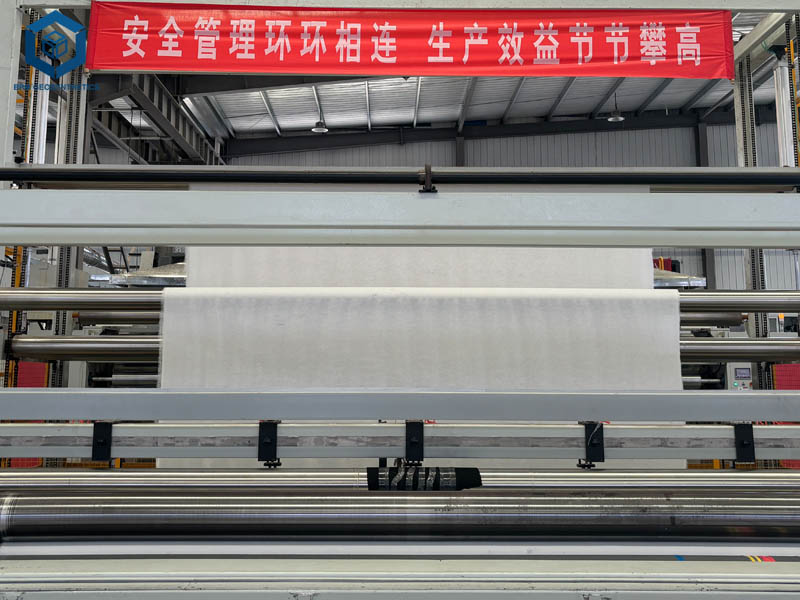
The Best Project Material Co., Ltd (BPM Geosynthetics), founded in 2007, is a leading geotextile manufacturer based in Shandong, China. With a 24,000 m² facility and exports to over 81 countries, BPM produces 2 million+ square meters annually, meeting ISO 9001, ASTM, and GRI-GT standards. Their non-woven geotextiles, like the Needled Punched and Continuous Filament models, offer 15% better cost-efficiency than North American competitors due to lean production and tariff-free exports from Cambodia. BPM’s products feature advanced needle-punching and thermal bonding, ensuring superior tensile strength (up to 300 lbs) and permeability (up to 120 gpm/ft²). Their end-to-end services, from design to installation, streamline project execution.
8. Cost Considerations
- Price Range: $0.15–$2.50/m², with lightweight options at $0.15–$1.00/m² and heavyweight at $0.50–$2.50/m².
- Installation Costs: $0.30–$1.50/m² for labor, $0.10–$0.50/m² for site preparation.
- Bulk Savings: Orders over 20,000 m² save 10–20%.
- Long-Term Value: Certified geotextiles reduce maintenance by 20–30%, saving $5,000–$50,000 over a project’s life.
9. Case Studies: Non-Woven Geotextile Performance
9.1 Highway Stabilization in India
- Project: 50,000 m² highway using BPM Needled Punched Geotextile (200 g/m²).
- Cost: $20,000 for materials ($0.40/m²), $25,000 for installation ($0.50/m²).
- Outcome: Reduced aggregate use by 25%, saving $40,000, with no settlement after 2 years.
9.2 Landfill Liner Protection in the USA
- Project: 30,000 m² landfill using Mirafi N120N (300 g/m²).
- Cost: $60,000 for materials ($2.00/m²), $30,000 for installation ($1.00/m²).
- Outcome: Prevented geomembrane punctures, saving $50,000 in repairs over 5 years.
10. Conclusion
Non-woven geotextiles, priced from $0.15 to $2.50 per square meter, are critical for drainage, filtration, and stabilization in civil engineering projects. The BPM Geosynthetics Needled Punched Geotextile Fabric leads for its versatility, while the Continuous Filament Nonwoven excels in drainage. By considering tensile strength, permeability, and project needs, you can select the right geotextile to enhance durability and reduce costs. BPM Geosynthetics’ certified products, backed by global expertise, offer 15–20% cost savings and proven performance. Explore their offerings at BPM Geotextile for tailored solutions.


