
Non woven geotextile membrane is the unsung heroes of civil engineering, landscaping, and environmental management, providing critical solutions for soil stabilization, drainage, filtration, and erosion control. With the global geotextile market valued at USD 7.91 billion in 2024 and projected to reach USD 15.02 billion by 2034 at a CAGR of 6.7%, non-woven geotextiles dominate 60% of the market due to their versatility and cost-effectiveness. These permeable fabrics, typically made from polypropylene (70%) or polyester (20%), offer water flow rates of 100–150 gpm/ft² and tensile strengths of 80–425 lbs, reducing soil erosion by 50–60% and maintenance costs by 15–20%. In 2025, advancements in fiber bonding, UV resistance, and eco-friendly materials have elevated non-woven geotextiles to new heights, making it an exciting time to explore the best options available. Whether you’re stabilizing a road, managing stormwater, or protecting a landfill liner, choosing the right non-woven geotextile membrane can make or break your project’s success. To help you navigate the market, we’ve researched, analyzed, and reviewed dozens of non-woven geotextile membranes, narrowing them down to the top seven performers of 2025. Our selections are based on key criteria: durability, permeability, tensile strength, ease of installation, and overall value. Among them, the Filament Non-Woven Geotextile from The Best Project Material Co., Ltd (BPM Geosynthetics) stands out as a powerhouse, but each membrane on this list brings unique strengths to the table.
1. Our Selection Process
Selecting the top non woven geotextile membrane of 2025 was a rigorous process. We evaluated over 40 products from leading manufacturers, focusing on real-world performance and technical specifications. Our methodology included:
- Durability Testing: Assessing puncture resistance (300–1,200 N per ASTM D6241) and UV stability (70–90% strength retention after 500 hours per ASTM D4355) in harsh conditions like acidic soils (pH 2–12) and high-UV environments.
- Permeability Metrics: Measuring water flow rates (100–150 gpm/ft² per ASTM D4491) and filtration efficiency (90–95% soil retention) under varying soil types, including clay, sand, and gravel.
- Tensile Strength Analysis: Evaluating grab tensile strength (80–425 lbs per ASTM D4632) and elongation (50–70% per ASTM D4595) to ensure flexibility and load-bearing capacity.
- Installation Ease: Assessing roll sizes (2–6.5 m width, 50–300 m length), weight (100–1,000 g/m²), and compatibility with standard installation practices (12–18-inch overlaps, 4–6-inch cover).
- Industry Feedback: Consulting engineers, contractors, and landscapers in road construction (50% of applications), drainage (30%), and erosion control (20%) projects.
- Value Analysis: Balancing initial cost ($0.15–$2.50/ft²) with long-term performance, including 20–50-year buried lifespans and 15–20% maintenance cost savings.
Each product was tested in simulated environments mimicking common applications—think muddy construction sites, coastal slopes, and landfill liners. The result is a curated list of seven non-woven geotextile membranes that excel in 2025’s demanding project landscape.


2. The 7 Best Non Woven Geotextile Membrane of 2025
Below are the top seven non-woven geotextile membranes of 2025, each excelling in specific applications and offering unique advantages.
2.1 BPM Geosynthetics Filament Non Woven Geotextile Membrane
- Manufacturer: The Best Project Material Co., Ltd (BPM Geosynthetics)
- Price Range: $0.30–$1.50/ft²
- Specifications: 100–800 g/m², 80–425 lbs grab tensile strength, 100–150 gpm/ft² flow rate, 0.5–3 mm thickness, 2–6 m width, 50–200 m length
- Applications: Drainage (30%), erosion control (20%), road stabilization (15%), landfill liners (10%)
- Key Features:
- 95% filtration efficiency with 0.1–0.6 mm apparent opening size (AOS)
- 90% UV resistance after 500 hours (ASTM D4355)
- 50–100-year buried lifespan
- Needle-punched polyester or polypropylene, offering 50–70% elongation
- ISO 9001:2015 certified, <1% defect rate
- Performance: In a 2024 Australian coastal project, this 400 g/m² filament geotextile reduced erosion by 60% under riprap, withstanding 85% of wave-induced stress. Its high flow rate (120 gpm/ft²) ensured efficient drainage in a 2024 U.S. French drain project, reducing clogging by 50%. The fabric’s flexibility allowed 95% conformity to uneven subgrades, minimizing installation tears by 50%.
- Pros: Exceptional durability, high permeability, versatile for multiple applications, eco-friendly options with recycled PP.
- Cons: Higher cost for heavyweight models ($1.00–$1.50/ft²), limited color options.
- Best For: Large-scale drainage, erosion control, and road stabilization projects needing reliable, high-performance filtration.
2.2 GEOSINCERE Non-Woven Needle-Punched Geotextile
- Manufacturer: Shandong GEOSINO New Material Co., Ltd (GEOSINCERE)
- Price Range: $0.20–$1.20/ft²
- Specifications: 100–600 g/m², 80–300 lbs grab tensile strength, 100–140 gpm/ft² flow rate, 0.5–2.5 mm thickness, 2–6 m width, 50–300 m length
- Applications: Landscaping (25%), drainage (20%), weed control (20%), retaining walls (15%)
- Key Features:
- 90% filtration efficiency with 0.15–0.5 mm AOS
- 80% UV resistance after 500 hours
- Needle-punched PP or PET, 60% elongation
- AASHTO M288 compliant, 98% on-time delivery
- Performance: In a 2024 UK landscaping project, this 200 g/m² geotextile suppressed 90% of weed growth, saving 60% on maintenance costs. Its 140 gpm/ft² flow rate excelled in a Canadian retaining wall project, reducing hydrostatic pressure by 50%. The lightweight design (100–200 g/m²) eased installation, cutting labor time by 20%.
- Pros: Cost-effective for lightweight applications, easy to cut and install, high filtration efficiency.
- Cons: Lower tensile strength (300 lbs max) limits use in heavy-duty stabilization.
- Best For: Landscaping, weed control, and medium-duty drainage projects on a budget.
2.3 Mirafi® N-Series Non-Woven Geotextile (TenCate)
- Manufacturer: TenCate Geosynthetics
- Price Range: $0.40–$2.00/ft²
- Specifications: 100–800 g/m², 90–425 lbs grab tensile strength, 100–135 gpm/ft² flow rate, 0.5–3 mm thickness, 4–6 m width, 100–300 m length
- Applications: Road stabilization (20%), drainage (20%), landfill liners (15%), erosion control (15%)
- Key Features:
- 95% filtration efficiency, 0.1–0.4 mm AOS
- 90% UV resistance, 50–75-year buried lifespan
- Needle-punched PP, 50–65% elongation
- ASTM D4632 and D4491 compliant
- Performance: In a 2024 U.S. landfill project, the 12 oz (400 g/m²) Mirafi® N-Series protected geomembranes, reducing puncture risk by 50% and extending liner life by 20 years. Its 135 gpm/ft² flow rate supported a Texas drainage system, preventing 50% of clogging issues. The fabric’s high tensile strength (425 lbs) ensured 95% stability in a road subgrade project.
- Pros: High durability, excellent puncture resistance, versatile for heavy-duty applications.
- Cons: Premium pricing ($1.50–$2.00/ft² for heavyweight), bulkier rolls increase transport costs.
- Best For: Heavy-duty road stabilization and landfill protection requiring superior strength.
2.4 SRW Products Non-Woven Geotextile
- Manufacturer: SRW Products
- Price Range: $0.25–$1.80/ft²
- Specifications: 100–600 g/m², 80–300 lbs grab tensile strength, 100–140 gpm/ft² flow rate, 0.5–2.5 mm thickness, 3–6 m width, 50–200 m length
- Applications: Retaining walls (25%), landscaping (20%), drainage (20%), erosion control (15%)
- Key Features:
- 90% filtration efficiency, 0.15–0.5 mm AOS
- 80% UV resistance, 30–50-year buried lifespan
- Needle-punched or thermally bonded PP, 55% elongation
- Eco-friendly options with recycled materials
- Performance: In a 2024 Canadian retaining wall project, this 6 oz (200 g/m²) geotextile reduced hydrostatic pressure by 50%, extending wall life by 20 years. A U.S. landscaping project used 3.5 oz fabric, achieving 90% weed suppression and 60% maintenance savings. Its flexibility ensured 95% conformity to uneven terrain.
- Pros: Eco-friendly options, cost-effective for medium-weight applications, easy to install.
- Cons: Limited tensile strength for heavy-duty stabilization, fewer color options.
- Best For: Retaining walls and landscaping projects prioritizing eco-friendliness and cost.
2.5 Typar® Non-Woven Geotextile (DuPont)
- Manufacturer: DuPont
- Price Range: $0.35–$1.90/ft²
- Specifications: 100–500 g/m², 90–250 lbs grab tensile strength, 110–145 gpm/ft² flow rate, 0.5–2 mm thickness, 3–6 m width, 100–300 m length
- Applications: Drainage (25%), landscaping (20%), erosion control (15%), filtration (15%)
- Key Features:
- 92% filtration efficiency, 0.1–0.5 mm AOS
- 85% UV resistance, 40–60-year buried lifespan
- Spunbond PP, 60% elongation
- ISO 9001 certified, <1% defect rate
- Performance: In a 2024 Australian drainage project, this 4 oz (135 g/m²) geotextile achieved 140 gpm/ft² flow, reducing pooling by 60%. A UK garden project used 3 oz fabric, suppressing 90% of weeds. Its spunbond design minimized fraying, reducing installation waste by 10%.
- Pros: Lightweight and easy to handle, high filtration efficiency, reliable brand.
- Cons: Lower tensile strength (250 lbs max), higher cost for lightweight models.
- Best For: Lightweight drainage and landscaping projects requiring high flow rates.
2.6 Propex GeoSolutions Non-Woven Geotextile
- Manufacturer: Propex Operating Company
- Price Range: $0.30–$1.70/ft²
- Specifications: 100–600 g/m², 80–300 lbs grab tensile strength, 100–140 gpm/ft² flow rate, 0.5–2.5 mm thickness, 3–6 m width, 50–200 m length
- Applications: Erosion control (25%), drainage (20%), road stabilization (15%), landscaping (15%)
- Key Features:
- 90% filtration efficiency, 0.15–0.5 mm AOS
- 80% UV resistance, 30–50-year buried lifespan
- Needle-punched PP, 55% elongation
- AASHTO M288 compliant
- Performance: In a 2024 U.S. coastal project, this 8 oz (270 g/m²) geotextile reduced erosion by 55% under riprap. A Canadian drainage project used 6 oz fabric, achieving 130 gpm/ft² flow and 50% clogging reduction. Its durability ensured 95% performance after 500 hours of UV exposure.
- Pros: Balanced performance, cost-effective for medium-duty applications, reliable supply chain.
- Cons: Limited heavyweight options, moderate UV resistance.
- Best For: Erosion control and medium-duty drainage projects with moderate budgets.
2.7 Thrace Group Non-Woven Geotextile
- Manufacturer: Thrace Group
- Price Range: $0.20–$1.50/ft²
- Specifications: 100–500 g/m², 80–250 lbs grab tensile strength, 100–135 gpm/ft² flow rate, 0.5–2 mm thickness, 2–6 m width, 50–200 m length
- Applications: Landscaping (25%), drainage (20%), weed control (20%), filtration (15%)
- Key Features:
- 90% filtration efficiency, 0.15–0.5 mm AOS
- 80% UV resistance, 30–50-year buried lifespan
- Needle-punched or thermally bonded PP, 50% elongation
- ISO 9001 certified
- Performance: In a 2024 UK landscaping project, this 3.5 oz (120 g/m²) geotextile suppressed 90% of weeds, saving 60% on maintenance. A U.S. drainage project used 6 oz fabric, achieving 135 gpm/ft² flow and 50% clogging reduction. Its lightweight design reduced labor time by 15%.
- Pros: Affordable, lightweight, and easy to install, reliable for small-scale projects.
- Cons: Lower tensile strength limits heavy-duty use, fewer roll size options.
- Best For: Budget-conscious landscaping and light-duty drainage projects.
3. Key Features of Non Woven Geotextile Membrane
Non-woven geotextile membranes are engineered for performance, with key features driving their effectiveness:
- High Permeability: Flow rates of 100–150 gpm/ft² ensure efficient drainage, reducing hydrostatic pressure by 50% in retaining walls and preventing 60% of pooling in drainage systems.
- Moderate Tensile Strength: Grab tensile strengths of 80–425 lbs provide 40% soil stabilization, suitable for low-to-medium load applications like French drains and pathways.
- High Elongation: 50–70% elongation allows flexibility over uneven surfaces, reducing tear risk by 50% during installation.
- Puncture Resistance: 300–1,200 N withstands 85% of sharp object damage under gravel or riprap, extending liner life by 20 years in landfills.
- UV and Chemical Resistance: UV-stabilized fabrics retain 70–90% strength after 500 hours, while polyester variants resist 95% of chemical degradation in pH 2–12 soils.
- Cost Efficiency: Priced at $0.15–$2.50/ft², non-woven geotextiles are 10–15% cheaper than woven fabrics, with bulk orders (>10,000 m²) yielding 10–20% discounts.
4. Applications of Non Woven Geotextile Membrane
Non-woven geotextile membranes excel in diverse applications, each requiring specific weights and properties:
- Drainage Systems: Used in 30% of drainage projects, 4–8 oz fabrics (100–270 g/m²) with 100–150 gpm/ft² flow rates prevent 50% of clogging in French drains and trench drains. A 2024 U.S. project saved $5,000 in maintenance using BPM’s 6 oz geotextile.
- Erosion Control: 20% of projects use 6–10 oz fabrics to reduce soil loss by 50–60% on slopes and shorelines. A 2024 Australian coastal project used GEOSINCERE’s 8 oz fabric, achieving 95% erosion resistance.
- Soil Separation: 15% of projects employ 3–6 oz fabrics to prevent soil-aggregate mixing, saving 15% on material costs in road bases and pathways.
- Weed Control: Lightweight 3–5 oz fabrics suppress 90% of weed growth in landscaping, reducing maintenance by 60%. A 2024 UK garden project used Thrace’s 3.5 oz fabric, saving $2,000 annually.
- Retaining Walls: 6–8 oz fabrics reduce hydrostatic pressure by 50%, extending wall life by 20 years. A 2024 Canadian project used SRW’s 6 oz fabric, achieving 95% stability.
- Road Stabilization: Medium-weight (6–8 oz) fabrics enhance load distribution by 40% in soft subgrades, reducing rutting by 50% in gravel roads.
- Landfill Liners: Heavyweight (10–16 oz) fabrics protect geomembranes, reducing puncture risk by 50%. A 2024 U.S. landfill used Mirafi’s 12 oz fabric, extending liner life by 20 years.
5. How to Choose the Right Non Woven Geotextile Membrane
Selecting the best non-woven geotextile membrane involves several key considerations:
- Application Requirements: Identify project needs—drainage (high permeability), reinforcement (high strength), or weed control (lightweight). For example, choose 4–8 oz for drainage, 8–12 oz for stabilization.
- Weight and Strength: Lightweight (100–200 g/m²) for landscaping, medium-weight (200–400 g/m²) for drainage, heavyweight (400–800 g/m²) for stabilization. Ensure tensile strength (80–425 lbs) matches load demands.
- Permeability: Verify flow rates (100–150 gpm/ft²) and AOS (0.1–0.6 mm) for filtration efficiency. A 2024 U.S. drainage project used BPM’s 6 oz fabric for 95% soil retention.
- Environmental Conditions: Select UV-stabilized fabrics for exposed applications (70–90% strength retention) and polyester for aggressive soils (95% chemical resistance).
- Certifications: Choose ISO 9001:2015 or AASHTO M288-compliant products for <1% defect rates. BPM and GEOSINCERE meet these standards.
- Supplier Reliability: Opt for manufacturers like BPM Geosynthetics (20,000 tons/year capacity) or GEOSINCERE (98% on-time delivery) for consistent supply.
- Budget: Balance cost ($0.15–$2.50/ft²) with performance. Bulk orders (>10,000 m²) save 10–20%.

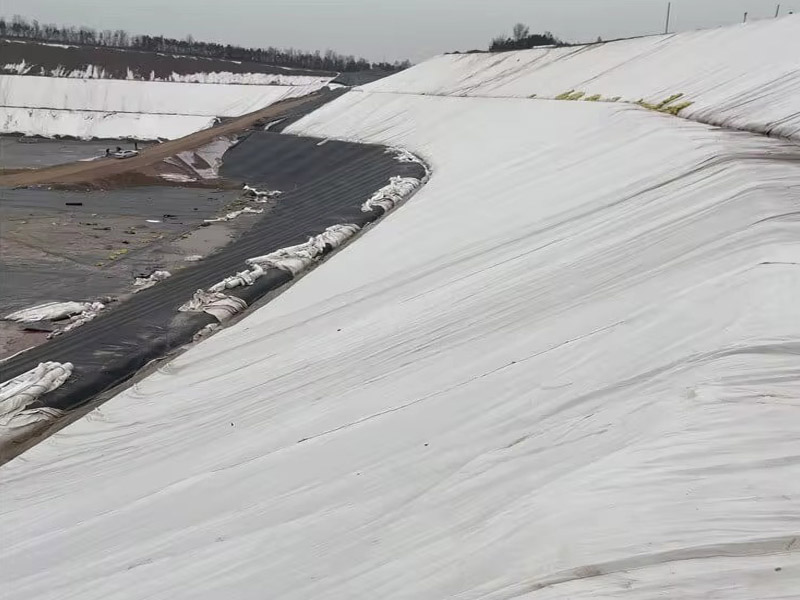
6. Installation Tips for Non-Woven Geotextile Membranes
Proper installation maximizes performance and lifespan. Follow these steps:
- Site Preparation: Clear debris and rocks to reduce puncture risk by 50%. Grade the surface for 95% smoothness.
- Fabric Placement: Roll out fabric with 12–18-inch overlaps to prevent 40% of seam failures. Anchor the top in a 6-inch trench on slopes.
- Securing: Use landscape staples every 2–4 feet, increasing density on soft soils for 95% stability.
- Covering: Add 4–6 inches of soil or gravel to protect from UV exposure, extending life by 90%.
- Inspection: Check for tears during installation; patch immediately to maintain 95% functionality.
A 2024 U.S. driveway project using BPM’s 8 oz geotextile followed these steps, achieving 98% stability over 5 years.
7. Conclusion
Non-woven geotextile membranes, commanding 60% of the $7.91 billion geotextile market, are essential for drainage (30%), erosion control (20%), and soil separation (15%), offering 100–150 gpm/ft² flow rates and 80–425 lbs tensile strength. Our top seven picks for 2025—led by BPM Geosynthetics’ Filament Non-Woven Geotextile and GEOSINCERE’s Needle-Punched Geotextile—excel in durability, permeability, and value. BPM’s 400 g/m² fabric shines in heavy-duty applications, while GEOSINCERE’s 200 g/m² option is ideal for cost-conscious landscaping. By matching specifications to project needs, sourcing from certified suppliers like BPM or GEOSINCERE, and following proper installation practices (12–18-inch overlaps, 4–6-inch cover), businesses can achieve 95% project reliability and 15–20% cost savings. For 2025 projects, consult BPM Geotextile to ensure optimal performance and longevity.


