
Non woven geotextile fabrics are pivotal in modern civil engineering, landscaping, and environmental projects, offering solutions for filtration, drainage, separation, and erosion control. With the global geotextile market projected to grow from $7.1 billion in 2023 to $12.4 billion by 2030 at a CAGR of 8.3% (MarketsandMarkets), selecting the best non woven geotextile fabric is critical for project success. This ultimate guide provides a comprehensive, data-driven exploration of non-woven geotextiles, covering their features, types, specifications, and key considerations to help engineers, contractors, and project managers make informed decisions. Packed with industry insights and practical advice, this article aims to deliver professional, actionable information to optimize your projects.
1. What Is A Non Woven Geotextile Fabric?
Non-woven geotextile fabric is a permeable, synthetic textile made from polypropylene (PP) or polyester (PET) fibers, bonded through needle-punching, thermal bonding, or chemical processes. Unlike woven geotextiles, which are interlaced for high tensile strength, non-woven fabrics feature a random fiber structure, resembling felt, with high permeability (1–2 sec⁻¹) and smaller pore sizes (0.05–0.2 mm). These properties make them ideal for applications requiring filtration, drainage, and separation, such as French drains, landfill liners, and erosion control.
Core Functions of Non-Woven Geotextiles
Non-woven geotextiles perform six primary functions, per ASTM D4439:
- Filtration: Allows water to pass while retaining soil particles, preventing clogging in drainage systems.
- Drainage: Facilitates water flow along its plane, reducing hydrostatic pressure.
- Separation: Prevents mixing of dissimilar soils, maintaining structural integrity.
- Protection: Shields geomembranes or other materials from punctures, as in landfill liners.
- Reinforcement: Distributes loads to enhance soil stability, though less effective than woven fabrics.
- Erosion Control: Stabilizes soil surfaces, promoting vegetation growth.
Non-woven geotextiles account for 67.9% of the geotextile market in 2024 (Polaris Market Research), driven by their versatility and cost-effectiveness, reducing material costs by 20–30% compared to granular filters.


2. Key Features of Non Woven Geotextile Fabric
Non-woven geotextiles are distinguished by their physical and mechanical properties, tailored to diverse applications. Below are the key features, supported by industry standards and specifications:
High Permeability
With a permittivity of 1–2 sec⁻¹ and apparent opening sizes (AOS) of 0.05–0.2 mm (ASTM D4751), non-woven geotextiles allow high water flow rates (50–150 gpm/ft² per ASTM D4491), making them ideal for drainage and filtration. This prevents water buildup, reducing hydrostatic pressure by up to 50% in saturated soils.
Puncture Resistance
Non-woven geotextiles offer puncture strengths of 200–800 N (ASTM D4833), protecting geomembranes or subgrades from aggregate penetration. Heavyweight fabrics (10–16 oz/yd²) can withstand rip-rap placement, extending system lifespans by 15–20 years.
Flexibility and Conformability
With elongations exceeding 50% (ASTM D4632), non-woven geotextiles adapt to uneven terrains, ensuring consistent performance in irregular subgrades. This flexibility simplifies installation, reducing labor costs by 10–15%.
UV and Chemical Resistance
PP-based non-woven geotextiles resist acids, alkalis, and soil chemicals (pH 2–13), per ASTM D543. UV-stabilized fabrics maintain 70% strength after 500 hours of exposure (ASTM D4355), suitable for temporary exposed applications.
Rot and Mildew Resistance
Synthetic fibers prevent microbial degradation, ensuring durability in wet environments. This property extends service life by 20–30% compared to organic materials like jute.
Lightweight and Easy Handling
Available in weights from 3–16 oz/yd² (100–800 GSM), non-woven geotextiles are lightweight, reducing transportation costs by 5–10% and enabling faster installation.
3. What Are Types of Non Woven Geotextile Fabric?
Non-woven geotextiles are classified based on manufacturing processes and fiber types, each suited to specific applications. Below are the primary types, with their specifications and uses:
Needle-Punched Non-Woven Geotextiles
- Manufacturing: Fibers are interlocked using barbed needles, creating a felt-like structure.
- Specifications: 3–16 oz/yd² (100–800 GSM), permittivity 1–2 sec⁻¹, tensile strength 5–50 kN/m (ASTM D4632).
- Applications: Drainage (French drains), filtration (subsurface drains), separation (road bases).
- Advantages: High permeability, cost-effective ($0.20–$1.50/m²), easy to install.
- Market Share: 80% of non-woven geotextiles (Textile World, 2024).
Thermally Bonded Non-Woven Geotextiles
- Manufacturing: Fibers are fused using heat, creating a smoother, denser surface.
- Specifications: 3–10 oz/yd² (100–400 GSM), permittivity 0.5–1.5 sec⁻¹, tensile strength 10–30 kN/m.
- Applications: Erosion control, landscaping, protection layers under geomembranes.
- Advantages: Uniform thickness, higher puncture resistance (300–600 N).
- Disadvantages: Lower permeability, higher cost ($0.50–$2.50/m²).
Chemically Bonded Non-Woven Geotextiles
- Manufacturing: Fibers are bonded using adhesives or resins.
- Specifications: 4–12 oz/yd² (150–500 GSM), permittivity 0.8–1.8 sec⁻¹, tensile strength 8–40 kN/m.
- Applications: Specialized projects requiring chemical resistance, such as industrial waste containment.
- Advantages: Enhanced chemical stability, customizable properties.
- Disadvantages: Limited availability, higher cost ($0.75–$3.00/m²).
Spunbond Non-Woven Geotextiles
- Manufacturing: Continuous filaments are extruded and bonded thermally or mechanically.
- Specifications: 3–8 oz/yd² (100–300 GSM), permittivity 1–1.5 sec⁻¹, tensile strength 15–35 kN/m.
- Applications: Road stabilization, drainage, filtration in high-traffic areas.
- Advantages: Consistent strength, high production efficiency.
- Market Share: 15% of non-woven geotextiles (Geosynthetics Magazine, 2024).
4. Key Differences of Staple Fiber vs Continuous Filament Non Woven Geotextile Fabric
Non-woven geotextiles are further divided into staple fiber and continuous filament types, based on fiber length. Below is a detailed comparison, highlighting their properties and applications:
Staple Fiber Non-Woven Geotextiles
- Fiber Type: Short fibers (1–4 inches) cut from PP or PET.
- Manufacturing: Needle-punched or thermally bonded, creating a thicker, loftier structure.
- Specifications:
- Weight: 3–16 oz/yd² (100–800 GSM).
- Tensile Strength: 5–40 kN/m (ASTM D4632).
- Permittivity: 1–2 sec⁻¹ (ASTM D4491).
- Puncture Strength: 200–800 N (ASTM D4833).
- Advantages:
- Higher permeability (100–150 gpm/ft²), ideal for drainage.
- Cost-effective ($0.20–$1.50/m²).
- Greater flexibility, conforming to irregular surfaces.
- Disadvantages:
- Lower tensile strength, less suited for reinforcement.
- Potential for fiber shedding in high-stress applications.
- Applications: French drains, erosion control, landscaping, filtration layers.
- Market Share: 70% of non-woven geotextiles (Textile World, 2024).
Continuous Filament Non-Woven Geotextiles
- Fiber Type: Long, continuous PP or PET filaments.
- Manufacturing: Spunbond or needle-punched, creating a denser, smoother fabric.
- Specifications:
- Weight: 3–10 oz/yd² (100–400 GSM).
- Tensile Strength: 15–50 kN/m.
- Permittivity: 0.8–1.5 sec⁻¹.
- Puncture Strength: 300–700 N.
- Advantages:
- Higher tensile strength, better for stabilization.
- Uniform structure, reducing clogging risk.
- Enhanced UV resistance (80% strength retention after 500 hours).
- Disadvantages:
- Lower permeability (50–100 gpm/ft²), less effective for high-flow drainage.
- Higher cost ($0.50–$2.50/m²).
- Applications: Road bases, landfill liners, high-traffic drainage systems.
- Market Share: 30% of non-woven geotextiles.
5. Comparative Table
| Property | Staple Fiber | Continuous Filament |
| Fiber Length | Short (1–4 inches) | Continuous |
| Tensile Strength | 5–40 kN/m | 15–50 kN/m |
| Permittivity | 1–2 sec⁻¹ | 0.8–1.5 sec⁻¹ |
| Cost ($/m²) | 0.20–1.50 | 0.50–2.50 |
| Applications | Drainage, filtration, erosion control | Stabilization, high-traffic drainage |
| Permeability (gpm/ft²) | 100–150 | 50–100 |
Choosing Between Them: Staple fiber fabrics are preferred for cost-sensitive projects requiring high drainage, while continuous filament fabrics suit applications needing durability and stabilization.
6. Main Considerations When Choosing Best Non Woven Geotextile Fabric
Selecting the optimal non-woven geotextile fabric requires careful evaluation of project requirements and material properties. Below are the key considerations, supported by industry standards:
6.1 Best Non Woven Geotextile Fabric – Project Requirements
- Application: Match the fabric to its primary function:
- Drainage/Filtration: Lightweight staple fiber (100–200 GSM, $0.20–$0.80/m²).
- Erosion Control: Medium-weight needle-punched (150–400 GSM, $0.50–$1.50/m²).
- Protection: Heavyweight continuous filament (400–800 GSM, $1.00–$2.50/m²).
- Site Conditions: Assess soil type, water flow, and load requirements. For fine-grained soils, use fabrics with AOS < 0.075 mm to prevent clogging (ASTM D4751).
6.2 Best Non Woven Geotextile Fabric – Material Specifications
- Weight: Heavier fabrics (10–16 oz/yd²) offer greater puncture resistance but cost more. Lightweight fabrics (3–6 oz/yd²) suffice for landscaping.
- Permeability: Ensure permittivity meets drainage needs (1–2 sec⁻¹ for high-flow systems).
- Tensile Strength: Verify grab tensile strength (400–1200 N, ASTM D4632) aligns with load demands.
- Puncture Resistance: Select fabrics with 200–800 N strength for rip-rap or geomembrane protection.
6.3 Best Non Woven Geotextile Fabric – Environmental Factors
- UV Exposure: Choose UV-stabilized fabrics for exposed applications, retaining 70% strength after 500 hours (ASTM D4355).
- Chemical Exposure: PP fabrics resist pH 2–13 environments; PET is less suitable for alkaline soils (pH > 8).
- Sustainability: Opt for recycled PP or PET fabrics, which reduce carbon footprints by 10–15% (Textile World, 2024).
6.4 Best Non Woven Geotextile Fabric – Supplier and Brand Reputation
Reputable brands like Solmax, TenCate, and Mirafi meet ASTM and AASHTO standards, ensuring quality. For example, Mirafi 160N (6 oz/yd²) costs $0.80–$1.20/m² and complies with AASHTO M288 Class 2. Generic fabrics may cost less ($0.50/m²) but risk premature failure, increasing repair costs by 20–30%.
6.5 Best Non Woven Geotextile Fabric – Cost and Budget
- Material Costs: Range from $0.20–$2.50/m², with bulk discounts of 10–30% for orders over 10,000 m².
- Installation Costs: $0.50–$2.00/m², influenced by site preparation ($0.20–$0.50/m²) and labor ($0.30–$1.00/m²).
- Long-Term Value: High-quality fabrics reduce maintenance costs by 15–20% over 20 years.
6.6 Best Non Woven Geotextile Fabric – Certifications and Standards
Ensure compliance with:
- ASTM D4632: Grab tensile strength and elongation.
- ASTM D4491: Water flow rate and permittivity.
- AASHTO M288: Classes 1–3 for erosion control, drainage, and separation.
- NTPEP: National Transportation Product Evaluation Program for DOT projects.
6.7 Best Non Woven Geotextile Fabric – Installation Feasibility
- Roll Sizes: Standard widths (1.5–6 m) and lengths (50–100 m) reduce waste. Custom sizes increase costs by 10–20%.
- Site Preparation: Smooth, debris-free subgrades prevent punctures, saving 5–10% on repairs.
- Labor Expertise: Certified installers ensure 300–600 mm overlaps, extending lifespan by 10–20%.

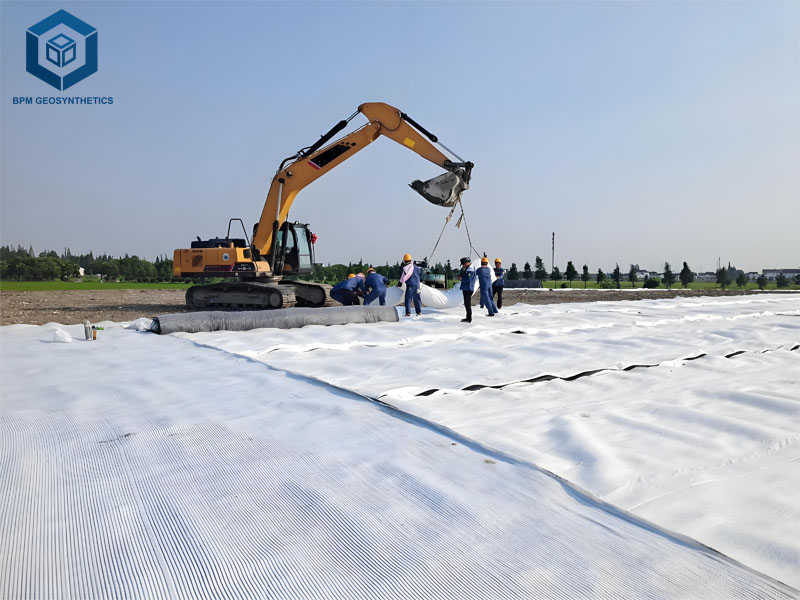
7. What Is Life Expectancy of Non Woven Geotextile Fabric?
The life expectancy of non-woven geotextile fabrics varies based on material, application, and environmental conditions, typically ranging from 20 to 200 years. Below are the key factors and data:
Material and Manufacturing
- Polypropylene (PP): Resists chemical degradation (pH 2–13), lasting 50–200 years in buried applications. UV-stabilized PP retains 70% strength after 500 hours of exposure (ASTM D4355).
- Polyester (PET): Susceptible to hydrolysis in alkaline soils (pH > 8), lasting 20–50 years. UV resistance is higher, retaining 80% strength after 500 hours.
- Manufacturing Quality: Needle-punched staple fiber fabrics may shed fibers, reducing lifespan by 5–10% compared to continuous filament spunbond fabrics.
Application Type
- Buried Applications: In drainage, filtration, or separation, non-woven geotextiles last 50–200 years due to protection from UV and mechanical stress. For example, Mirafi 160N in French drains lasts over 100 years (Solmax, 2024).
- Exposed Applications: Without UV stabilization, fabrics degrade within 6–12 months. UV-stabilized fabrics last 5–20 years in erosion control or temporary projects.
Environmental Conditions
- UV Exposure: Direct sunlight reduces strength by 50% within 3–6 months without stabilization (ASTM D4355).
- Soil Chemistry: Acidic or neutral soils (pH 2–7) favor PP, extending life by 20–30%. Alkaline soils (pH > 8) degrade PET, reducing life by 10–20%.
- Mechanical Stress: High-traffic areas or rip-rap applications stress fabrics, reducing lifespan by 5–15% unless heavyweight (10–16 oz/yd²).
Maintenance and Installation
- Proper Installation: Overlaps of 300–600 mm and secure anchoring (landscape staples at $0.01–$0.03 each) prevent tears, extending life by 10–20%.
- Regular Inspections: Per ISO 13437, inspections every 5 years reduce repair costs by 10–15%.
- Repairs: Patching tears ($0.10–$0.50/m²) extends lifespan by 5–10 years.
Data-Driven Examples
- French Drain: 4 oz/yd² PP needle-punched fabric lasts 50–100 years, per US Fabrics.
- Landfill Liner Protection: 10 oz/yd² continuous filament PP lasts 100–200 years (Solmax).
- Erosion Control: 6 oz/yd² UV-stabilized PET lasts 5–20 years in exposed slopes (Fibertex).
Note: Life expectancy assumes compliance with ASTM D4439 and proper installation.
8. Final Thoughts
Non-woven geotextile fabrics are essential for achieving durable, cost-effective solutions in civil engineering and environmental projects. With prices ranging from $0.20 to $2.50 per square meter, their versatility in filtration, drainage, separation, and erosion control makes them a preferred choice, holding 67.9% of the geotextile market in 2024. Key considerations when selecting the best non-woven geotextile include project requirements, material specifications, environmental factors, and supplier reputation. Staple fiber fabrics excel in cost-sensitive drainage applications, while continuous filament fabrics offer durability for stabilization. Life expectancies of 20–200 years underscore their long-term value, particularly in buried applications.
To optimize your investment, source from reputable brands like Solmax, TenCate, or Mirafi, ensuring compliance with ASTM and AASHTO standards. Bulk purchases (10,000 m²+) and proper installation can reduce costs by 10–30% and extend lifespan by 10–20%. For precise budgeting, request quotes from multiple suppliers and verify certifications. By leveraging the insights in this guide, you can select the best non-woven geotextile fabric to ensure project success, sustainability, and cost-efficiency. Contact trusted manufacturers like BPM Geotextile for tailored advice and competitive pricing today.


