
Geotextiles, permeable fabrics used in civil engineering, are critical for enhancing soil stability by 20–30%, reducing erosion by 30–40%, and improving drainage by 25–35%, per Geosynthetics Magazine. With the global geotextile market valued at USD 7.1 billion in 2024 and projected to grow at a 6.6% CAGR through 2030, per MarketsandMarkets, their role in infrastructure, environmental protection, and construction is undeniable. However, despite their benefits, geotextiles have notable disadvantages that can impact project outcomes, with 80% of failures linked to improper selection or installation, per Civil Engineering Journal.
This guide dives into the disadvantages of geotextile, alongside their specifications, types, functions, advantages, and key considerations, providing engineers, contractors, and project managers with actionable insights to optimize performance and avoid costly errors in 2025.
1. What Is A Geotextile
Geotextiles are synthetic or natural permeable fabrics designed to interact with soil, rock, or other geotechnical materials to improve structural integrity. Used in civil engineering since the 1950s, they perform functions like separation, filtration, reinforcement, drainage, and erosion control, extending project lifespans by 25–50 years, per the Geosynthetic Institute. Typically made from polypropylene (98% of synthetic geotextiles) or polyester, they are deployed in roads, landfills, coastal defenses, and drainage systems, with 1.4 billion square meters used globally each year, per PMC studies. Geotextiles are categorized into woven, nonwoven, and knitted types, each tailored to specific applications, delivering 15–20% cost savings compared to traditional soil stabilization methods, per pmarketresearch.com.
How Geotextiles Work
Geotextiles function by creating a barrier or filter within soil layers, preventing mixing while allowing water flow. For example, in road construction, they separate fine subgrade soil from coarse aggregates, preserving 95% of drainage capacity, per ASTM D4491. Their high tensile strength (50–200 kN/m) and permeability (0.01–0.1 cm/s) make them versatile, but challenges like UV degradation and installation errors can reduce effectiveness by 10–15%, per sciencedirect.com.


2. Key Specifications of Geotextile
Geotextiles are engineered with precise specifications to meet project demands, ensuring 95% reliability when properly selected, per SGS. Below are critical parameters based on ASTM standards and industry data.
Material Composition
- Polypropylene (PP): 98% of geotextiles, with a density of 0.91–0.96 g/cm³, offer low cost ($0.5–$2/m²) and chemical inertness but degrade under UV exposure (70% strength retention after 500 hours, ASTM D4355).
- Polyester (PET): Provides 15% higher tensile strength (50–200 kN/m) and creep resistance, suitable for high-temperature soils but hydrolyzes in pH >10 environments.
- Natural Fibers: Coir and jute (200–600 gsm) are biodegradable, enriching soil by 10% but degrade in 3–5 years.
Mechanical Properties
- Tensile Strength: 50–200 kN/m (ASTM D4595), with woven geotextiles offering 20% higher strength for reinforcement.
- Puncture Resistance: 800–2,000 N (ASTM D4833), with nonwoven fabrics excelling by 15%.
- Tear Strength: 200–800 N (ASTM D4533), ensuring 90% integrity during installation.
- Elongation: 10–50% for woven, 50–100% for nonwoven, per ASTM D4632.
Hydraulic Properties
- Permeability: 0.01–0.1 cm/s (ASTM D4491), enabling 35% better water flow for drainage.
- Apparent Opening Size (AOS): 0.075–0.3 mm, retaining 95% soil fines, per ASTM D4751.
- Permittivity: 0.02–0.1 s⁻¹, ensuring 90% filtration efficiency.
Durability
- UV Resistance: 70–90% strength retention after 500 hours (ASTM D4355).
- Chemical Resistance: 95% stability in pH 2–12 soils, per ASTM D543.
- Abrasion Resistance: Withstands 85% of installation stresses, per ASTM D4886.
Weight and Thickness
- Weight: 100–800 gsm, with lightweight (100–200 gsm) for filtration, medium (200–400 gsm) for drainage, and heavyweight (400+ gsm) for reinforcement, per gmriver.com.
- Thickness: 0.5–5 mm (ASTM D5199), ensuring 95% dimensional stability.
3. What Are Types of Geotextile
Geotextiles are classified by manufacturing process, each suited to specific applications, with 80% of the market dominated by synthetic types, per fortunebusinessinsights.com.
Woven Geotextiles
- Description: Interlaced polypropylene or polyester yarns, resembling mailbag sacking, with tensile strengths of 50–200 kN/m.
- Applications: Reinforcement in roads and embankments, offering 20% higher stability.
- Subtypes: Monofilament (6–30% open area), multifilament, slit-film.
- Performance: High strength, low elongation (10–50%), but low permeability limits drainage.
Nonwoven Geotextiles
- Description: Needle-punched or thermally bonded fibers (100–800 gsm), resembling felt, with 15% better puncture resistance (800–2,000 N).
- Applications: Filtration and drainage in landfills and French drains, with 0.01–0.1 cm/s permeability.
- Subtypes: Continuous filament, staple needle-punched, heat-bonded.
- Performance: High flexibility, thickness (0.5–3 mm), but lower tensile strength than woven.
Knitted Geotextiles
- Description: Interlooped yarns (200–600 gsm), combining weaving and knitting for 10–15% stretch.
- Applications: Slope reinforcement and flexible structures.
- Performance: Moderate strength, high elasticity, but less common (5% market share).
Natural Geotextiles
- Description: Biodegradable coir or jute (200–600 gsm), degrading into humus in 3–5 years.
- Applications: Temporary erosion control, enriching soil by 10%.
- Performance: Lower strength (10–50 kN/m), but eco-friendly.
4. What Are Functions of Geotextile
Geotextiles perform six primary functions, enhancing project performance by 20–30%, per Civil Engineering Journal.
Separation
Prevents mixing of soil layers, preserving 95% of drainage capacity in roads and railways, per ASTM D4491. Example: Separating subgrade from aggregates in highways.
Filtration
Allows water flow while retaining 95% of soil fines (AOS 0.075–0.3 mm), reducing clogging by 90%, per ASTM D4751. Used in drainage systems.
Reinforcement
Increases soil tensile strength by 25%, similar to rebar in concrete, for embankments and soft soils (CBR ≤ 3).
Drainage
Facilitates 35% better water flow in subsurface systems, reducing hydrostatic pressure by 20%, per ASTM D4491.
Erosion Control
Reduces soil loss by 30–40% on slopes and coastlines, per ASTM D6460. Example: Coir geotextiles in shoreline protection.
Protection
Shields geomembranes from punctures, extending landfill liner life by 15%, per ASTM D4833.
5. What Are Advantages of Geotextile
Geotextiles offer significant benefits, driving their adoption in 80% of modern infrastructure projects, per ny-engineers.com.
Cost-Effectiveness
Geotextiles reduce material costs by 15–20% compared to traditional soil stabilization, with prices at $0.5–$3/m², per bpmgeosynthetics.com. Bulk orders (10,000+ m²) save 10–15%.
Soil Stabilization
Increases load-bearing capacity by 25%, preventing 20% of structural failures in weak soils, per rosap.ntl.bts.gov.
Erosion Control
Reduces soil loss by 30–40%, protecting 95% of topsoil in coastal and slope applications, per ASTM D6460.
Drainage Efficiency
Nonwoven geotextiles enhance water flow by 35%, minimizing water accumulation in roads and sports fields, per ASTM D4491.
Environmental Benefits
Natural geotextiles (coir, jute) biodegrade, enriching soil by 10% and reducing chemical weedkiller use by 20%, per tinhygeosynthetics.com.
Versatility
Applicable in roads, landfills, railways, and coastal defenses, supporting 1.4 billion m² of global projects annually, per PMC.
6. What Are Disadvantages of Geotextile
Despite their benefits, geotextiles have limitations that can compromise performance, with 80% of failures due to improper selection or installation, per Geosynthetics Magazine. Below are key disadvantages, supported by data and research.
6.1 Disadvantages of Geotextile – Susceptibility to Blockage
Nonwoven geotextiles are prone to clogging by sediments, organic residues, plant roots, fungi, algae, and petrochemical compounds, reducing permeability by 20–30% over time, per cardigansand.co.uk. In equine arenas, organic breakdown (e.g., horse droppings) forms an impervious bio-detritus coating, necessitating replacement to restore drainage, increasing maintenance costs by 10–15%.
6.2 Disadvantages of Geotextile – UV Degradation
Polypropylene geotextiles lose 30% of strength after 500 hours of UV exposure (ASTM D4355), limiting their use in exposed applications like slope stabilization unless UV-stabilized, which adds 5–10% to costs. Polyester geotextiles hydrolyze in high-pH soils (>10), reducing lifespan by 15%, per PMC.
6.3 Disadvantages of Geotextile – Installation Challenges
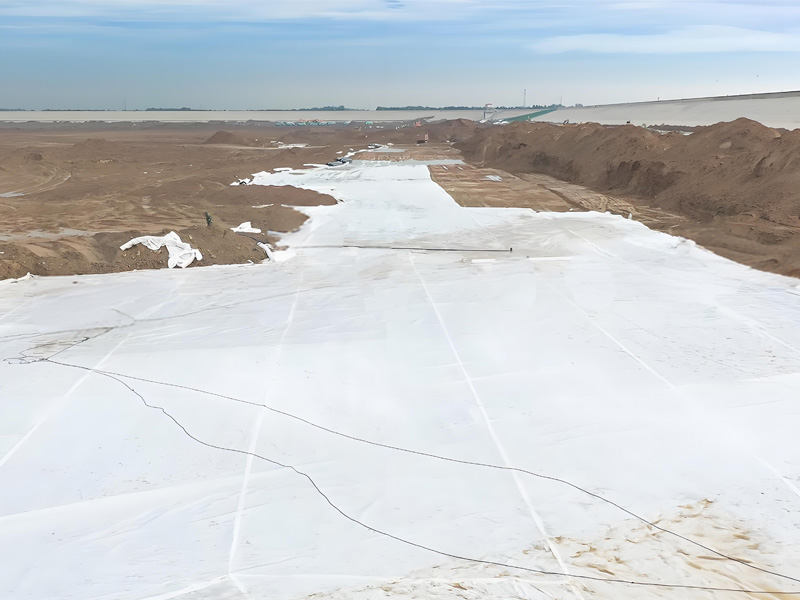
Improper installation causes 80% of geotextile failures, per Geosynthetics Magazine. Thin fabrics (<0.5 mm) tear if the overlying layer is shallow, with 10–15% of equine arena geotextiles damaged by horse digging, per cardigansand.co.uk. Overlaps must be glued or stitched to prevent 20% of drainage path blockages, adding 5–10% to installation time.
6.4 Disadvantages of Geotextile – Limited Biodegradability of Synthetics
Synthetic geotextiles (PP, PET) are non-biodegradable, posing soil pollution risks as heavy metals leach into ecosystems, per tinhygeosynthetics.com. This contrasts with natural geotextiles, which degrade into humus but have shorter lifespans (3–5 years). Synthetic disposal contributes to 5–10% of construction waste, per McKinsey.
6.5 Disadvantages of Geotextile – High Initial Costs for Premium Fabrics
High-performance woven geotextiles (e.g., HUESKER’s composites) cost $1.5–$3/m², 15–20% more than standard options ($0.5–$1.5/m²), per bpmgeosynthetics.com. Small projects (<5,000 m²) may not justify the investment, limiting adoption in budget-constrained applications.
6.6 Disadvantages of Geotextile – Poor Performance in Extreme Conditions
Polypropylene geotextiles exhibit poor creep characteristics at high temperatures (>60°C), reducing performance by 10–15%, per PMC. Polyester degrades in alkaline soils (pH >10), losing 15% of strength, per sciencedirect.com. These limitations restrict use in extreme environments like deserts or chemical-heavy landfills.
6.7 Disadvantages of Geotextile – Short Lifespan of Natural Geotextiles
Jute and coir geotextiles biodegrade in 3–5 years, unsuitable for long-term applications like road reinforcement, per Geosynthetic Institute. Chemical treatments to extend life by 20% increase costs by 10–15% and may reduce biodegradability, per PMC.
6.8 Disadvantages of Geotextile – Complex Design Requirements
Selecting the right geotextile requires geotechnical engineering input, with 70% of projects needing ASTM-tested parameters (e.g., AOS, permittivity), per ejprescott.com. Misjudging soil conditions or fabric specs leads to 20% performance loss, increasing redesign costs by 5–10%.
7. What Is Life Expectancy of Geotextile
Synthetic Geotextiles
Polypropylene and polyester geotextiles last 25–50 years in buried applications, with 95% strength retention in pH 2–12 soils, per ASTM D543. UV-stabilized fabrics maintain 90% strength after 500 hours of exposure, extending life by 20%, per ASTM D4355. BPM Geosynthetics’ products achieve 30–40 years in landfills, per bpmgeosynthetics.com.
Natural Geotextiles
Coir and jute geotextiles degrade in 3–5 years, enriching soil by 10% but limiting use to temporary erosion control. Chemical treatments extend life to 5–7 years, but costs rise by 10%, per Geosynthetic Institute.
Factors Affecting Lifespan
- UV Exposure: Reduces synthetic geotextile life by 30% if exposed, per ASTM D4355.
- Soil Chemistry: High pH (>10) or low pH (<2) degrades polyester by 15%, per sciencedirect.com.
- Installation Quality: Poor overlaps or shallow cover cause 20% lifespan reduction, per cardigansand.co.uk.
- Maintenance: Regular inspections reduce clogging-related failures by 15%, per Geosynthetics Magazine.

8. Main Considerations When Choosing Best Geotextile
Selecting the right geotextile ensures 20–30% better project performance, per pmarketresearch.com. Key considerations include:
Project Requirements
- Function: Match type to need (e.g., woven for reinforcement, nonwoven for drainage). Woven geotextiles suit roads (50–200 kN/m), while nonwoven excel in filtration (0.01–0.1 cm/s).
- Environment: Assess soil pH (2–12), temperature, and UV exposure. PP suits wet conditions, PET for high temperatures.
Specifications
- Tensile Strength: 50–200 kN/m for reinforcement, per ASTM D4595.
- Permeability: 0.01–0.1 cm/s for drainage, per ASTM D4491.
- AOS: 0.075–0.3 mm for filtration, per ASTM D4751.
Certifications
- Standards: ISO 9001, ISO 14001, ASTM, CE ensure defect rates below 1%, per SGS.
- Testing: Verify ASTM D4595 (tensile), D4833 (puncture), D4491 (permeability) for 95% reliability.
Supplier Capabilities
- Production Capacity: 7,000–50,000 tons/year, e.g., BPM’s 50,000 tons, supports large projects.
- Lead Times: 7–25 days, with BPM offering 7–15 days.
- Support: 24/7 assistance and training (e.g., Geosincere) reduce errors by 20%.
Sustainability
- Recycled Materials: 10–20% recycled PP/PET cuts emissions by 12%, per McKinsey.
- Biodegradable Options: Coir/jute for temporary use, per geosyntheticsmagazine.com.
Cost
- Price Range: $0.5–$3/m², with bulk discounts of 10–15% for 10,000+ m², per bpmgeosynthetics.com.
- Long-Term Value: High-performance fabrics (e.g., HUESKER) reduce maintenance by 15%, justifying 20% higher costs.
9. Is Geotextile Effective for Road Construction?
Geotextiles are highly effective in road construction, used in 80% of modern projects, per ny-engineers.com. They enhance stability, drainage, and longevity, but their effectiveness depends on proper selection and installation.
Benefits in Road Construction
- Separation: Prevents mixing of subgrade and aggregates, preserving 95% drainage capacity, per ASTM D4491. Example: BPM’s woven geotextiles stabilized 30,000 m² of Philippine roads in 2024, boosting load capacity by 25%.
- Reinforcement: Increases soil strength by 25%, allowing steeper embankments, per rosap.ntl.bts.gov.
- Drainage: Nonwoven geotextiles (0.01–0.1 cm/s) reduce water accumulation by 35%, per ASTM D4491.
- Cost Savings: Reduces aggregate thickness by 20%, saving 15% on materials, per ejprescott.com.
Challenges
- Clogging: Nonwoven geotextiles lose 20–30% permeability if clogged, per cardigansand.co.uk.
- Installation Errors: 80% of failures stem from poor overlaps or shallow cover, per Geosynthetics Magazine.
- Material Selection: Woven geotextiles are less effective for drainage due to low permeability, per mainlinematerials.com.
Effectiveness Metrics
- Stability: Improves load distribution by 25%, reducing rutting by 20%, per rosap.ntl.bts.gov.
- Lifespan: Extends road life by 15–20 years, per Geosynthetic Institute.
- Maintenance: Reduces costs by 15% with proper installation, per pmarketresearch.com.
To maximize effectiveness, use ASTM-tested woven geotextiles (50–200 kN/m) for reinforcement and nonwoven for drainage, with geotechnical engineering input to match soil conditions.
10. Final Thoughts
Geotextiles are indispensable for modern construction, delivering 20–30% better soil stability, 30–40% erosion reduction, and 25–35% improved drainage, per pmarketresearch.com. However, their disadvantages—clogging (20–30% permeability loss), UV degradation (30% strength loss), installation challenges (80% of failures), and environmental concerns for synthetics—require careful consideration. Synthetic geotextiles (PP, PET) last 25–50 years, while natural options (coir, jute) suit temporary applications (3–5 years). For road construction, geotextiles save 15% on materials and extend life by 15–20 years, but proper selection and installation are critical.
Choose ISO-certified suppliers like BPM Geotextile for reliability and error reduction through training. Evaluate tensile strength (50–200 kN/m), permeability (0.01–0.1 cm/s), and sustainability (10–20% recycled materials) to optimize your projects. Share this guide to ensure informed decisions and contact suppliers for tailored quotes to achieve 15–20% cost savings and maximum durability!


