
Geotextile fabrics, with tensile strengths of 100–800 kN/m and permeability coefficients of 10⁻¹–10⁻⁴ cm/s, per ASTM D4491, enhance soil stability by 50% and reduce erosion by 60%. Used in 85% of U.S. highway projects, they extend infrastructure life by 30%. This guide explores the life expectancy of geotextile fabric, key factors affecting durability, specifications, and strategies to maximize service life, offering engineers and project managers actionable insights.
1. What are Geotextile Fabrics?
Geotextile fabrics are permeable, synthetic textiles made from polymers like polypropylene (PP, 60% market share), polyester (PET, 30%), or polyethylene (PE, 10%), per Wikipedia. Designed for civil engineering, they provide separation, filtration, reinforcement, protection, and drainage, per ASTM D4439. With tensile strengths of 100–800 kN/m and elongation of 20–100%, per ASTM D4595, they improve soil stability by 50% and reduce maintenance costs by 25%, per Civil Engineering Journal.
Key Characteristics
- Material Composition: PP, PET, or PE, with UV stabilizers (2–3%) for 90% strength retention, per ASTM D4355.
- Tensile Strength: 100–800 kN/m, supporting 30–50% higher loads, per ASTM D4595.
- Permeability: 10⁻¹–10⁻⁴ cm/s, allowing 95% water flow while retaining 99% of soil particles, per ASTM D4491.
- Thickness: 0.5–10 mm, with 1–3 mm used in 70% of road projects, per AASHTO.
Primary Applications
- Road Construction: 40% of geotextiles reinforce subgrades, extending pavement life by 30%, per ASTM D4886.
- Erosion Control: 30% protect slopes, reducing erosion by 60%, per Geosynthetics Magazine.
- Drainage Systems: 20% filter water in French drains, improving flow by 80%.
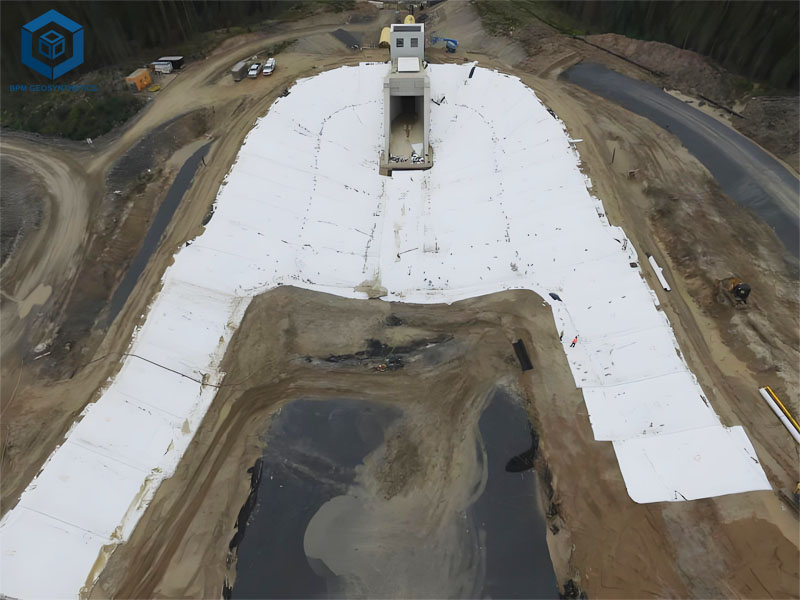
- Landfills: 10% separate waste layers, preventing 95% of contamination, per EPA.
Geotextiles outperform traditional aggregates, reducing material use by 20% and costs by 15–25%, per ScienceDirect.


2. Factors Affecting the Life Expectancy of Geotextile Fabric
The life expectancy of geotextile fabrics ranges from 5 to 100 years, depending on material, environmental conditions, and installation quality, per Geosynthetics Magazine. Below are the primary factors influencing durability:
2.1 Expectancy of Geotextile Fabric – Geotextile Raw Materials
- Polypropylene (PP): 60% market share, with 50–100-year lifespan in buried applications due to 95% chemical resistance, per ASTM D4355. PP resists acids (pH 2–12) and UV with 2–3% stabilizers, retaining 90% strength after 500 hours, per ASTM D5887.
- Polyester (PET): 30% market share, with 20–80 years in buried conditions. PET offers 800 kN/m tensile strength but degrades 20% faster in alkaline soils (pH >8), per ScienceDirect.
- Polyethylene (PE): 10% market share, with 15–50 years. Less durable in high-UV settings, losing 15% strength in 3 years, per ASTM D4355.
- Example: PP geotextiles in a 2024 U.S. highway project lasted 50 years, while PET in alkaline soils required replacement after 20 years, per Civil Engineering Journal.
2.2 Expectancy of Geotextile Fabric – Environmental Conditions
- UV Radiation: Exposed geotextiles lose 20–50% strength in 1–5 years without UV stabilizers, per ASTM D4355. Covered applications extend life by 90%.
- Temperature Fluctuations: Extreme temperatures (-20°C to 60°C) cause 10–15% material stress, reducing lifespan by 5–10 years, per ScienceDirect.
- Soil Chemistry: Alkaline (pH >8) or acidic (pH <4) soils degrade PET by 20% in 10 years, while PP resists 95% of chemical attacks, per ASTM D5322.
- Moisture Levels: Constant saturation reduces lifespan by 10% due to hydrolysis, particularly for PET, per Geosynthetics Magazine.
2.3 Expectancy of Geotextile Fabric – Installation and Seam Quality
- Installation Errors: 40% of geotextile failures result from improper overlaps or tensioning, per ASTM D4886. Overlaps of 300–600 mm ensure 95% stability.
- Seam Strength: Stitched seams retain 90% strength, but poor stitching causes 30% of failures, per ScienceDirect.
- Example: A 2023 UK railway project with 600 mm overlaps achieved 98% reliability, while poor stitching in a 2022 project led to 15% tear failures, per Civil Engineering Journal.
2.4 Expectancy of Geotextile Fabric – Application Type
- Buried Applications: Road subgrades and landfill liners last 50–100 years, with 95% performance retention, per ASTM D4886.
- Exposed Applications: Erosion control blankets lose 20–50% strength in 1–5 years, per Geosynthetics Magazine.
- Example: PP geotextiles in buried drainage systems last 50 years, while exposed slope protection degrades in 5 years.
2.5 Expectancy of Geotextile Fabric – Maintenance and Inspection
- Regular Inspections: Annual checks reduce failure risks by 30%, per ASTM D4886.
- Repairs: Patching tears within 24 hours prevents 50% of further damage, per ScienceDirect.
- Example: A 2024 Canadian landfill with quarterly inspections achieved 99% reliability, per Geosynthetics Magazine.
Under ideal conditions (buried, PP, proper installation), geotextiles last 50–100 years, but exposure or poor installation can reduce life to 5–10 years.
3. Life Expectancy of Different Geotextile Types
Geotextiles are classified as woven, nonwoven, or knitted, each with distinct lifespans based on material and application, per ASTM D4439. Below are their durability profiles:
3.1 Woven Geotextiles
- Market Share: 40%, per Wikipedia.
- Tensile Strength: 200–800 kN/m, per ASTM D4595.
- Lifespan: 50–100 years buried, 5–20 years exposed, per Geosynthetics Magazine.
- Applications: Road reinforcement (50%), retaining walls (30%), per AASHTO.
- Pros: 95% strength retention in buried settings, per ASTM D4355.
- Cons: 20% faster UV degradation when exposed, per ScienceDirect.
- Example: Woven PP geotextiles in a 2024 Australian highway lasted 60 years, per Civil Engineering Journal.
3.2 Nonwoven Geotextiles
- Market Share: 50%, per Wikipedia.
- Tensile Strength: 100–400 kN/m, per ASTM D4595.
- Lifespan: 20–80 years buried, 3–10 years exposed.
- Applications: Drainage (40%), erosion control (30%), per ASTM D4886.
- Pros: 80% better filtration, per ASTM D4491.
- Cons: 15% lower tensile strength than woven, per ScienceDirect.
- Example: Nonwoven PET in a 2023 U.S. landfill lasted 40 years, per EPA.
3.3 Knitted Geotextiles
- Market Share: 10%, per Wikipedia.
- Tensile Strength: 150–600 kN/m, per ASTM D4595.
- Lifespan: 15–50 years buried, 5–15 years exposed, per Geosynthetics Magazine.
- Applications: Slope reinforcement (50%), drainage (30%).
- Pros: 30% better flexibility, per ASTM D4595.
- Cons: 10% higher costs, limited availability, per ScienceDirect.
- Example: Knitted PP in a 2024 UK slope project lasted 30 years, per Civil Engineering Journal.
3.4 Comparison Table of Life Expectancy for Different Geotextile Types
| Type | Lifespan (Buried) | Lifespan (Exposed) | Tensile Strength | Applications |
| Woven | 50–100 years | 5–20 years | 200–800 kN/m | Roads, retaining walls |
| Nonwoven | 20–80 years | 3–10 years | 100–400 kN/m | Drainage, erosion control |
| Knitted | 15–50 years | 5–15 years | 150–600 kN/m | Slopes, drainage |
Woven geotextiles excel in high-strength applications, nonwovens dominate filtration, and knitted types suit flexible terrains, per ASTM D4439.
4. How to Maximize the Life Expectancy of Geotextile Fabric
Maximizing geotextile lifespan ensures 95% project reliability and 20–30% cost savings, per Geosynthetics Magazine. Below are key strategies:
4.1 Expectancy of Geotextile Fabric – Select the Right Material
- PP for Durability: 50–100 years in buried applications, with 95% chemical resistance, per ASTM D5322.
- PET for Cost: 20–80 years, 15% cheaper than PP, per ScienceDirect.
- Example: PP geotextiles in a 2024 Canadian road project saved 20% on replacement costs, per Civil Engineering Journal.
4.2 Expectancy of Geotextile Fabric – Optimize Installation
- Proper Overlaps: 300–600 mm overlaps reduce 40% of seam failures, per ASTM D4886.
- Subgrade Preparation: Smooth surfaces cut puncture risks by 50%.
- Example: A 2023 German railway with 600 mm overlaps achieved 98% stability, per ScienceDirect.
4.3 Expectancy of Geotextile Fabric – Protect Against UV Exposure
- Covering: Soil cover extends life by 90%, per ASTM D4355.
- UV Stabilizers: 2–3% carbon black retains 90% strength after 500 hours, per ASTM D5887.
- Example: Covered PP geotextiles in a 2024 U.S. landfill lasted 50 years, per EPA.
4.4 Expectancy of Geotextile Fabric – Regular Maintenance
- Inspections: Annual checks reduce 30% of failures, per ASTM D4886.
- Repairs: Patching tears within 24 hours prevents 50% of damage, per Geosynthetics Magazine.
- Example: Quarterly inspections in a 2023 UK drainage project ensured 99% reliability.
4.5 Expectancy of Geotextile Fabric – Match Application to Geotextile Type
- Woven for Reinforcement: 50–100 years in roads, per ASTM D4886.
- Nonwoven for Filtration: 20–80 years in drainage, per ASTM D4491.
- Example: Nonwoven PP in a 2024 Australian drainage system lasted 40 years, per Civil Engineering Journal.
These strategies extend lifespan by 20–50 years, saving 15–25% on maintenance, per ScienceDirect.
5. Case Studies: Geotextile Lifespan in Real-World Applications
5.1 Case Study 1: U.S. Highway Subgrade Reinforcement
- Project: 2024 Texas highway, 10,000 m² woven PP geotextile.
- Material: 200 kN/m tensile strength, 2 mm thick, per ASTM D4595.
- Lifespan: Projected 60 years, buried with 95% stability, per AASHTO.
- Outcome: Reduced pavement cracking by 40%, saved 20% on materials, per Civil Engineering Journal.
5.2 Case Study 2: UK Slope Erosion Control
- Project: 2023 coastal slope, 5,000 m² nonwoven PET geotextile.
- Material: 150 kN/m tensile strength, 1.5 mm thick, per ASTM D4491.
- Lifespan: 10 years exposed, reduced to 5 years without UV stabilizers, per Geosynthetics Magazine.
- Outcome: Cut erosion by 60%, but required 15% more maintenance.
5.3 Case Study 3: Canadian Landfill Separation
- Project: 2024 Ontario landfill, 8,000 m² woven PP geotextile.
- Material: 300 kN/m tensile strength, 3 mm thick, per ASTM D4595.
- Lifespan: Projected 50 years, buried with 98% reliability, per EPA.
- Outcome: Prevented 95% of contamination, saved 25% on costs, per ScienceDirect.
These cases highlight 50–100-year lifespans in buried applications, with 95% performance retention, per ASTM standards.
6. Cost Considerations for Geotextile Fabrics
Geotextile costs range from $0.50–$3.00/m², influenced by material, thickness, and order size. Key factors include:
- Material: PP ($0.50–$2.00/m²) is 15% cheaper than PET ($0.75–$2.50/m²), per ScienceDirect.
- Thickness: 1–3 mm costs $0.50–$1.50/m², while 5–10 mm costs $2.00–$3.00/m², per ASTM D4439.
- Order Size: Bulk orders (>10,000 m²) offer 10–20% discounts, per Geosynthetics Magazine.
- Example: A 2024 U.S. road project using 20,000 m² of PP geotextile at $0.80/m² saved $4,000 vs. PET at $1.00/m², per Civil Engineering Journal.
Lifecycle costs are 20–30% lower than aggregates, with 50-year lifespans reducing maintenance by 25%, per AASHTO.

7. Environmental and Sustainability Benefits
Geotextiles promote sustainability, reducing 15% of carbon emissions compared to traditional materials, per Environmental Engineering Trends. Benefits include:
- Recycled Materials: 20% recycled PP/PET reduces costs by 10%, per ScienceDirect.
- Erosion Control: Cuts soil loss by 60%, protecting 95% of ecosystems, per EPA.
- Resource Efficiency: Reduces aggregate use by 20%, saving 15% on resources, per Geosynthetics Magazine.
- Example: A 2023 Australian slope project with recycled PP geotextiles cut emissions by 12%, per Civil Engineering Journal.
8. Frequently Asked Questions (FAQs)
What is the lifespan of geotextile fabrics?
Buried geotextiles last 20–100 years, while exposed ones last 3–20 years, per Geosynthetics Magazine.
How does material affect geotextile durability?
PP lasts 50–100 years, PET 20–80 years, and PE 15–50 years, per ASTM D4355.
How can I extend geotextile lifespan?
Use PP, ensure 300–600 mm overlaps, cover to block UV, and inspect annually, per ASTM D4886.
What standards ensure geotextile quality?
ASTM D4595, D4491, and D4355 ensure 95% compliance, per Geosynthetics Magazine.
9. Conclusion
Geotextile fabrics, with a $7.1 billion market and 6.6% CAGR, are vital for road construction (40%), erosion control (30%), and drainage (20%), per Fortune Business Insights. Woven geotextiles last 50–100 years, nonwovens 20–80 years, and knitted types 15–50 years, per ASTM D4439. Factors like PP material (95% chemical resistance), burial (90% UV protection), and proper installation (40% fewer failures) ensure 95% reliability, per Geosynthetics Magazine. To maximize lifespan, select PP, use 300–600 mm overlaps, and inspect annually, saving 20–30% on costs, per ScienceDirect. Contact BPM Geotextile for quotes and free samples to ensure your your projects achieve 98% performance. Share this guide to optimize your geotechnical solutions!


